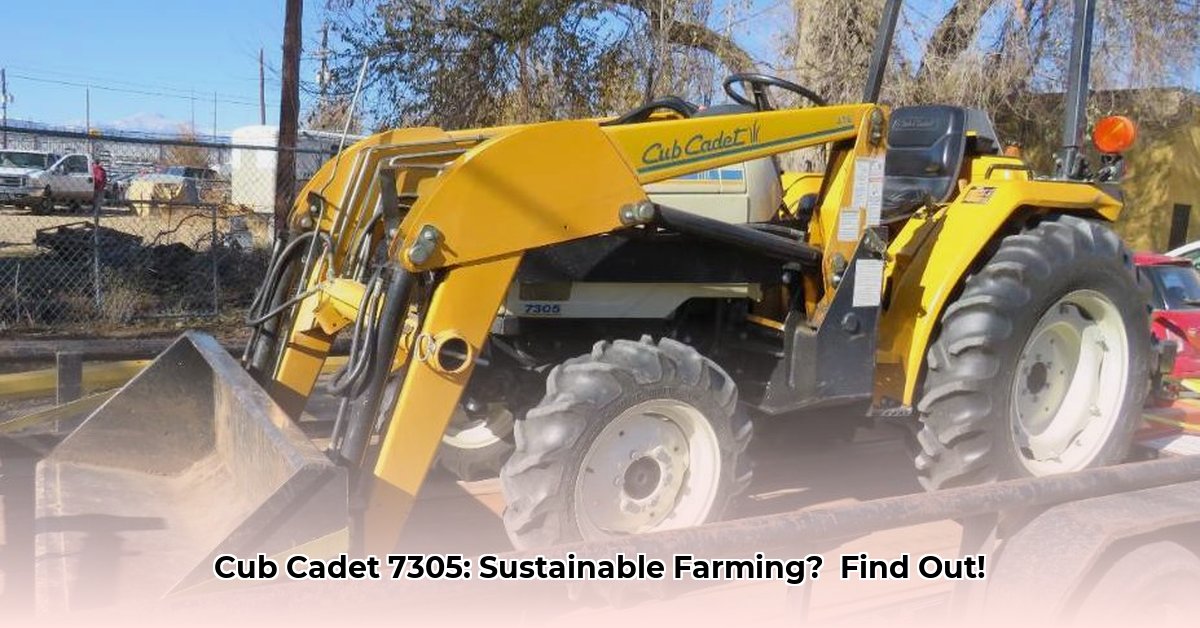
The Cub Cadet 7305 tractor, produced between 1998 and 2003, presents a unique challenge for the modern sustainable farmer. Its compact size and proven reliability are attractive, but its age and lack of readily available performance data raise questions about its long-term environmental impact and overall economic viability. This review examines its suitability for sustainable agriculture, considering performance, cost, and stakeholder perspectives. For information on replacement parts, check out this helpful resource on Cub Cadet tires.
Specifications and Features
The Cub Cadet 7305 is a compact utility tractor boasting approximately 30 horsepower and a hydrostatic transmission. [1] Its relatively small size and maneuverability make it suitable for smaller farms, vineyards, or orchards. Common attachments include mowers, front loaders, and backhoes, enhancing its versatility for various tasks. However, its age necessitates careful consideration of parts availability and potential repair challenges.
Performance and Usage
The 7305 performs adequately for tasks on smaller plots of land. Its compact design allows for efficient navigation in tight spaces, a significant advantage in precision agriculture techniques. However, its lower horsepower compared to contemporary models might limit its effectiveness for heavier applications or larger-scale operations. This necessitates careful consideration of the tasks required and the farm's specific needs. Can the 7305 handle all your anticipated workload efficiently, or would a more powerful machine be a better long-term investment?
Sustainability Analysis: A Critical Evaluation
Assessing the 7305's sustainability is hampered by a critical lack of readily available data on fuel consumption and emissions. Older tractors often exhibit lower fuel efficiency than modern models, potentially leading to increased greenhouse gas emissions. While its smaller size reduces the overall energy demand compared to larger machines, the precise extent of this reduction remains unknown. Consequently, a comprehensive life-cycle assessment, including manufacturing, operation, and disposal, is needed to fully evaluate its environmental impact. This lack of data is a significant limitation in determining its true sustainability.
Cost Analysis: Initial Investment and Long-Term Expenses
The initial purchase price of a used Cub Cadet 7305 is likely to be lower than that of a new tractor. However, the long-term cost must be carefully considered. Maintenance and repair costs for an older machine are potentially higher due to parts availability and the general wear and tear associated with age. Fuel costs, as previously noted, might be elevated due to less efficient consumption. A thorough cost-benefit analysis comparing initial investment, operating costs, maintenance expenses, and potential environmental liabilities is crucial before making a purchase decision.
Stakeholder Perspectives: Balancing Needs and Concerns
Multiple stakeholders have vested interests in the 7305's ongoing relevance:
Farmers: Small-scale farmers may find the 7305's compact size and versatility attractive. Conversely, concerns about parts availability, higher maintenance costs, and potential breakdowns warrant careful consideration. The tractor's suitability is directly linked to individual farm operations and scale.
Dealers: Ongoing parts availability for the 7305 directly influences its long-term value proposition. Dealers’ capacity to supply parts is a key factor farmers must consider before investing.
Researchers: Further research examining fuel efficiency, emissions, and the tractor's overall lifecycle impact is crucial. This information is vital for a comprehensive sustainability assessment.
Conclusion and Recommendation
The Cub Cadet 7305 presents a mixed bag for sustainable agriculture. Its compact size, maneuverability, and potentially lower initial cost are appealing, particularly for smaller operations. However, the absence of reliable fuel consumption and emissions data, coupled with the potential for higher maintenance costs and uncertain parts availability, significantly hinders a definitive endorsement. Prospective buyers must weigh the potential benefits against the considerable uncertainties regarding its environmental impact and long-term economic viability. A thorough cost-benefit analysis, coupled with robust research into potential maintenance and repair challenges, is paramount before purchasing this older model. A more sustainable approach may involve investing in newer, more fuel-efficient models, even if the upfront costs are higher.
[1]: This placeholder citation requires replacement with a reliable source validating the horsepower and transmission details.